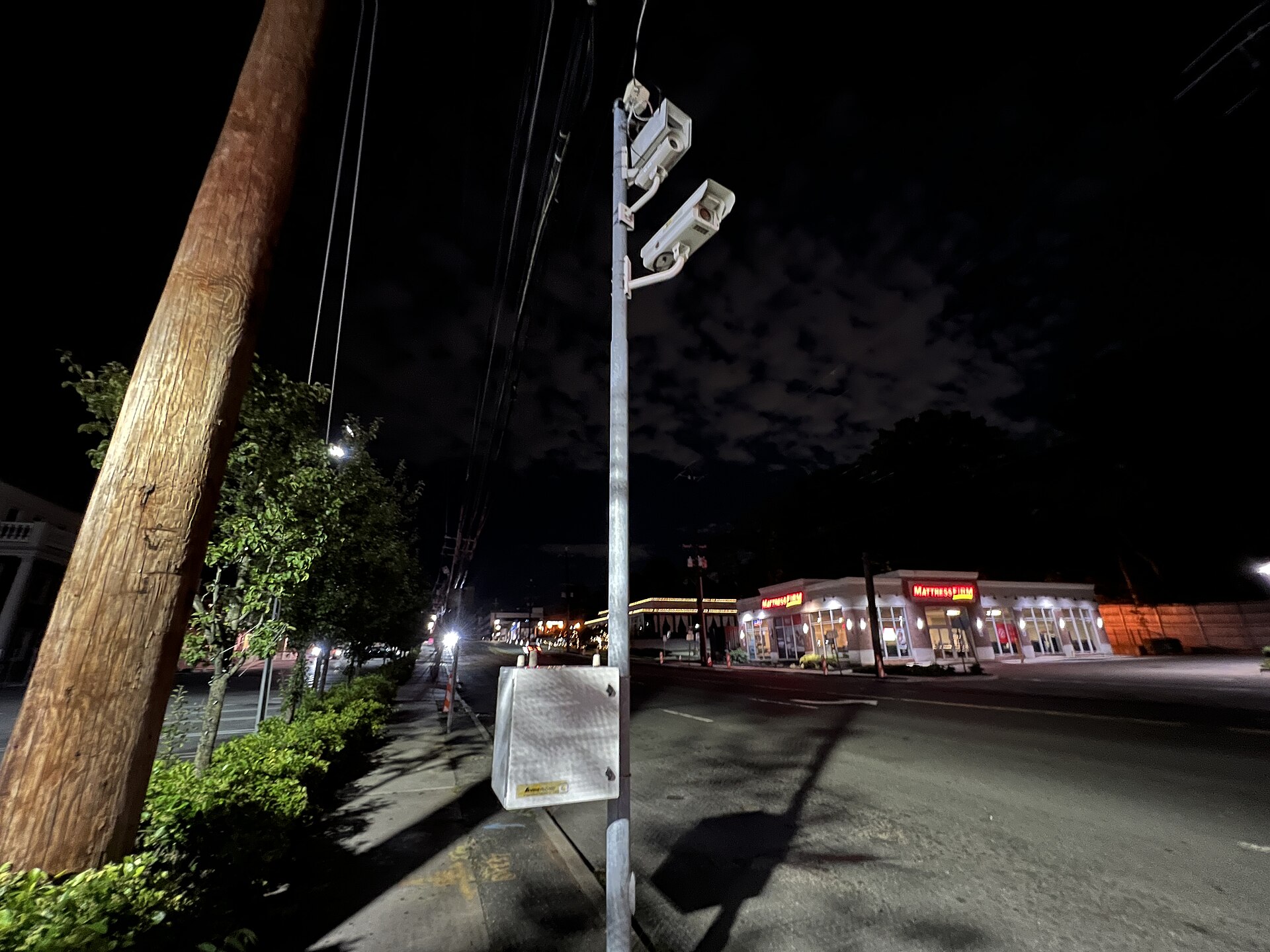
Automated ticketing was sold as a safety program. It operates as a revenue program. It falls hardest on the people who can least absorb it. And in most American communities, nobody was ever asked.
Call something a safety device and it slips past the questions we ask about any tax. Who imposed it, who voted on it, who pays it, and what happens to the people who cannot.
Traffic fines are not assessed on ability to pay. They are flat. A $100 citation is an annoyance to one household and a crisis in another, and the machine that issued it cannot tell the difference.
That is what a regressive tax is. And in most places it is one that was never put to a vote, gets decided outside a courtroom, is run by a private contractor, and ends in a boot, an impound lot, or a suspended license when it goes unpaid.
Vision Zero Network, which supports camera enforcement, concedes the point directly: flat fines "are inherently regressive" and can "reinforce harmful poverty traps."
A single $100 camera citation, expressed as a share of one week's gross pay.
Most of Europe solved this decades ago. Finland, Germany, Austria, France, and Switzerland scale traffic fines to income. Chicago piloted a 50 percent reduction for low-income residents. The tools exist. American cities have chosen not to use them.
Maurice Gatsonides won the 1953 Monte Carlo Rally. He built his first speed-measuring rig to time his own cornering so he could improve his driving. Only later did anyone realize the same device could be pointed at everyone else.
Two rubber tubes across the road wired to a stopwatch. The company Gatsonides founded still supplies enforcement cameras today.
Deployed in the Netherlands. Radar for road traffic follows around 1971, the first mobile speed camera around 1982.
Friendswood, Texas runs the first US photo-radar program in 1986. La Marque follows in 1987. Neither lasts more than a few months before public pressure ends it. Resistance to automated ticketing in this country is as old as the technology's arrival here.
The first US photo-radar program that sticks.
Put in after a collision that killed three people. First prosecutions that July.
Authorized by a 1988 state demonstration program limited to cities over one million people, then extended again and again.
On the A316 near Twickenham Bridge. The volume was the point, and it was visible from the very first installation.
Then the decline begins. More programs get shut down than started, every year, for a decade.
The public beat the red light camera. The industry pivoted.
Red light camera programs have been shrinking since 2012. Speed camera programs more than doubled in about four and a half years. As of 2026 there are now more US communities running speed cameras than red light cameras, reversing two decades of the opposite pattern.
Source: Insurance Institute for Highway Safety community trackers. IIHS does not publish a single continuous year-by-year table, so intermediate years are drawn from IIHS releases and reporting citing them. Figures are community counts, not camera counts.
Camera enforcement has been put to a public vote at least 46 times. It lost roughly 42 of them, often by margins that do not exist anywhere else in American politics. Sulphur, Louisiana rejected cameras 86 to 14. League City, Texas voted 77 percent to ban them.
These are not close calls, and they are not confined to one region or one party. Voters in Ohio, Texas, Washington, California, Louisiana, Maryland, Missouri, New Mexico, and Alaska have all reached the same conclusion when handed a ballot.
| Jurisdiction | Date | Result | Outcome |
|---|---|---|---|
| Sulphur, Louisiana | 2009 | 86% | Cameras out |
| League City, Texas | 2013 | 77% | Cameras out |
| Cleveland, Ohio (Issue 35) | Nov 2014 | ~77% | Cameras out |
| Anaheim, California (Measure K) | Nov 2010 | ~73% | Banned preemptively |
| St. Charles County, Missouri | Nov 2014 | ~72% | Cameras out |
| Chillicothe, Ohio | Nov 2009 | 72% | Cameras out |
| Mukilteo, Washington | Nov 2010 | ~70% | Cameras out |
| Dayton, Texas | Nov 2011 | 70% | Cameras out |
| Bellingham, Washington | Nov 2011 | ~65% | Cameras out |
| Monroe, Washington | Nov 2011 | ~65% | Advisory |
| Sykesville, Maryland | 2010 | 61% | Repealed pre-launch |
| Ashtabula, Ohio | Nov 2011 | 60% | Cameras out |
| Arlington, Texas | May 2015 | 59.5% | Cameras out |
| Longview, Washington | Nov 2011 | 59% | Advisory |
| Baytown, Texas | Nov 2010 | 58% | Cameras out |
| Newport Beach, California (Measure EE) | Nov 2012 | 57% | Cameras out |
| Murrieta, California (Measure N) | Nov 2012 | 57.2% | Cameras out |
| South Euclid, Ohio | Nov 2011 | 55% | Cameras out |
| Garfield Heights, Ohio | Nov 2011 | 54% | Cameras out |
| Houston, Texas (Prop 3) | Nov 2010 | 52.8% | Overturned in court |
| East Cleveland, Ohio | Nov 2011 | >54% | Voted to keep |
A partial list of votes with confirmed margins. Percentages are the share voting against camera enforcement, except the final row. Several additional votes are documented without published percentages.
In the one clear case where a community voted to keep camera enforcement, the mayor had warned that roughly 68 city jobs, about a third of the workforce, depended on ticket revenue. That is not a safety argument. It is a budget argument, made out loud. We include this vote because leaving it out would be dishonest, and because it proves the point better than any of the wins.
Houston voters repealed red light cameras in November 2010. The city and its camera vendor went to federal court, where a judge ruled the ballot measure was an untimely referendum and therefore invalid. The voters were overruled. The City Council shut the cameras off anyway in August 2011, but the precedent stands: when the public voted the machines out, the government litigated to keep them.
Georgia passed a law requiring yellow lights at camera intersections to run one second longer than the national minimum. It took effect at the end of 2008. What happened next is the most damaging fact in this entire debate.
Duluth, Lilburn, Norcross, Snellville, and Suwanee shut their programs down. Not because the cameras stopped working. Because they stopped paying for themselves.
The reverse experiment has also been run. A Chicago Inspector General investigation found the city quietly dropped its yellow-light floor from 3.0 seconds to 2.9 while switching camera vendors, producing 77,000 additional citations at $100 each. In Florida, the state transportation department removed language from its engineering manual that had kept yellows longer, and citation volume rose. Half a second can roughly double the number of tickets an intersection produces.
The city told the public its speed camera error rate was under one quarter of one percent. A confidential audit commissioned by the city sampled roughly 1,000 citations from a single day in 2012 and found the real error rate was above 10 percent, roughly 40 times what officials claimed.
One camera on Loch Raven Boulevard was wrong 58 percent of the time. Thirteen cameras had double-digit error rates. The city issued about 700,000 citations that year at $40 each, which puts roughly 70,000 bad tickets and $2.8 million in the hands of people who had done nothing.
The program shut down in 2013. When Baltimore relaunched automated enforcement in 2017, the new system issued $38,480 in duplicate tickets on its first day.
A camera citation is typically a civil matter, not a criminal one. There is no officer to cross-examine, the registered owner is presumed to be the driver, and the hearing is administrative rather than judicial. Contesting a $40 ticket can cost more in lost wages than paying it.
Which means the true error rate does not really matter to the balance sheet. Most people pay regardless, because fighting it is not worth the day off work. That is the design.
Unpaid tickets in Chicago double, then accrue collection fees of 22 percent. In one documented case, less than half of a $6,700 balance was the original fines.
Booting and impoundment follow, with their own fees. Losing the car frequently means losing the job that would have paid the ticket.
Roughly 11 million Americans hold licenses suspended over unpaid fines and fees. Chicago sought more than 21,000 suspensions in a single year, triple its 2010 level.
Chicago motorists collectively owe about $1.45 billion in ticket debt going back to 1990. Ticket revenue reached $264 million in one year, close to 7 percent of the city's operating budget. Personal bankruptcy filings that included city debt rose from roughly 1,000 a year to more than 10,000.
Eight of the ten ZIP codes with the highest ticket debt per adult are majority Black. Majority-Black areas hold about 40 percent of the debt while receiving about 22 percent of the tickets. The disparity is not in who gets photographed. It is in who can absorb the hit.
Most organizations in this space lost credibility by overclaiming. We would rather concede the strong version of the other side's argument and win the part that actually matters.
The Cochrane systematic review found injury crashes fell between 8 and 50 percent near speed cameras. A study in Montgomery County, Maryland found a 19 percent reduction in the likelihood that a crash produced an incapacitating or fatal injury. New York City recorded speeding drops of up to 94 percent at camera locations. Research that corrects for the statistical objection most often raised against these studies still finds real reductions.
Anyone telling you camera enforcement does not work is not reading the evidence. Our argument does not require that claim and never will.
A 2024 study of roughly 46 million Chicago-area trips found camera citations tracked the racial makeup of drivers actually on the road, while police stops did not. Automated enforcement also removes the pretextual traffic stop, which is where a great deal of police violence against Black drivers begins. That is a serious argument made by serious people, and we will not claim the opposite.
Our objection lives on the back end, not the front end. Not who gets photographed. What happens to them afterward when the fine is flat, the debt compounds, and the license disappears.
The United States has about 12 road deaths per 100,000 people, more than double most peer nations and roughly triple the median among wealthy countries. Between 1991 and 2021 American fatal crashes fell about 21 percent while comparable countries fell roughly 77 percent. This is a genuine crisis and we are not indifferent to it.
We support engineering that works. Longer yellow intervals, better signal timing, road design that slows traffic without a billing department. Georgia proved a one second change can cut violations 80 percent. Those fixes save lives and generate no revenue, which is why they are not the ones getting installed.
We are not asking for a national ban. We are asking that a power to tax and surveil be treated like one.
No new automated enforcement program without direct voter approval, and periodic reauthorization after that. Georgia has already adopted a referendum requirement. Ohio is considering one. Arizona has a statewide measure on the ballot.
Before a camera goes up, the intersection must meet minimum yellow-interval standards and the jurisdiction must document that engineering remedies were tried. No jurisdiction should be permitted to shorten a yellow light at a camera location, ever.
A flat fine is not a flat burden. Finland, Germany, Austria, France, and Switzerland scale traffic penalties to ability to pay. Any American jurisdiction can do the same, and none of them lose a single safety benefit by doing it.
No per-citation vendor compensation. No camera revenue to the general fund. Money above operating cost goes to road safety engineering or is returned. A program that cannot survive without the income it generates is not a safety program.
Roughly 11 million Americans have suspended licenses over unpaid fines and fees. Taking someone's license because they are poor does not make a road safer. It makes the debt permanent.
We are building a public record of every American community running automated enforcement: what it collects, where the money goes, and whether the public ever got a vote. Add your name, then send this to one person who has gotten a ticket. That is how it moves.